


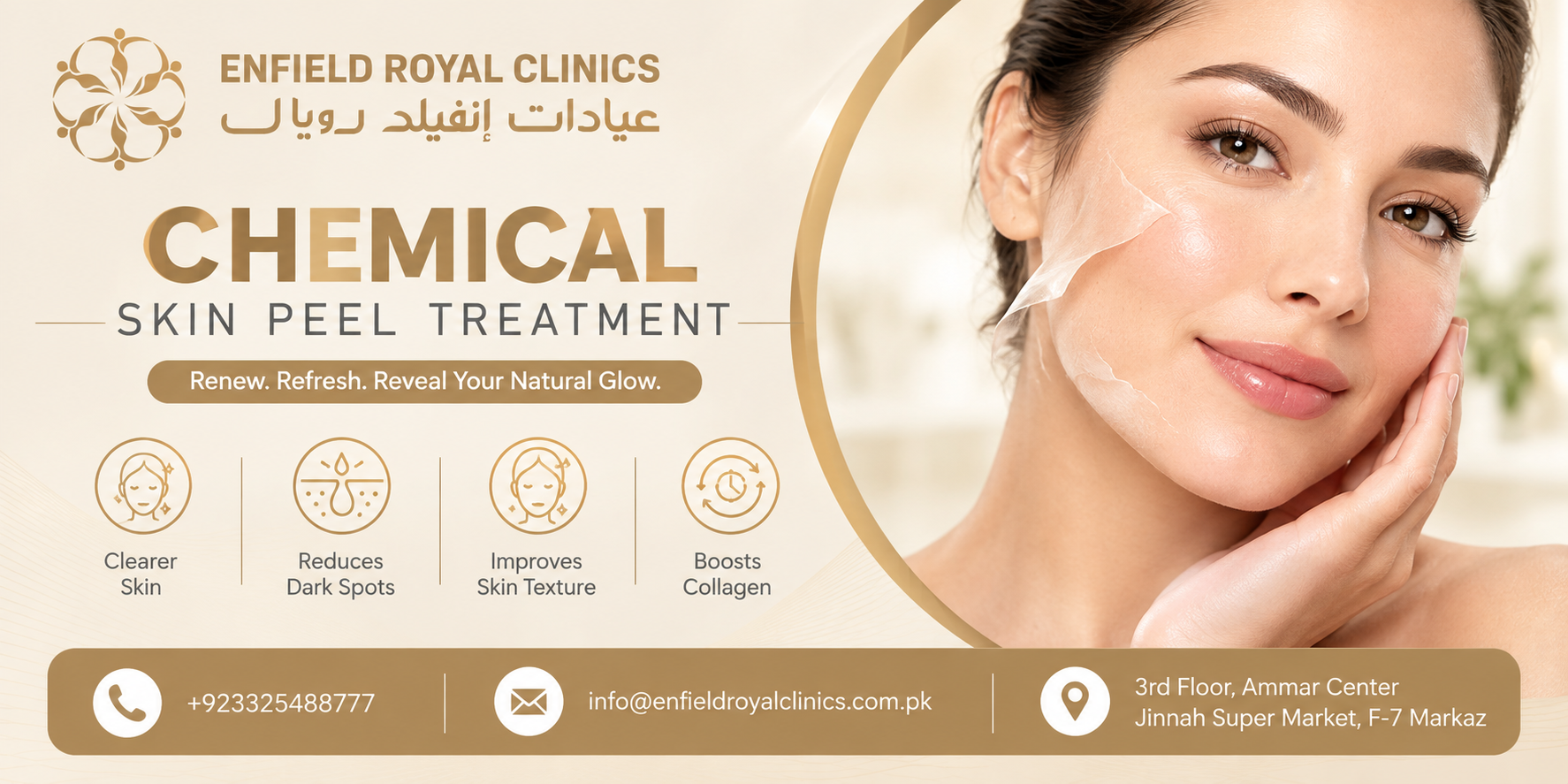
Skin naturally renews itself through a continuous process in which older cells gradually shed and new cells develop. However, factors such as sun exposure, pollution, ageing, acne, dehydration, and environmental stress can affect the appearance of the skin. Dead skin cells may accumulate on the surface, making the complexion look dull, rough, or uneven.
Chemical peel treatment is a professional skincare option designed to support controlled exfoliation and encourage a fresher-looking skin surface. By applying a carefully selected chemical solution, the treatment helps remove specific layers of damaged or dead skin cells. Depending on the peel’s strength and the patient’s skin condition, it may also support improvements in pigmentation, fine lines, acne marks, and uneven texture.
People considering Chemical peel treatment in Islamabad should understand how skin renewal works, what the procedure involves, and how professional planning influences the results. Chemical peels are not identical for every individual, and the treatment must be customized according to skin type, sensitivity, and specific skincare goals.
What Does Skin Renewal Mean?
Skin renewal is the natural process through which the skin produces new cells and sheds older ones. The outermost layer of the skin, known as the epidermis, acts as a protective barrier. New skin cells develop in deeper layers and gradually move toward the surface as they mature.
Over time, dead cells may remain on the skin’s surface and contribute to a rough or dull appearance. The natural renewal process can also slow with age, while sun damage and inflammation may affect skin texture and tone.
Chemical peel treatment supports this process by providing controlled exfoliation. The selected solution helps loosen dead or damaged surface cells, allowing them to shed more effectively. This can reveal skin that appears smoother and more refreshed.
A chemical peel does not completely replace the skin’s natural renewal system. Instead, it works as a professional treatment that encourages exfoliation and may support the appearance of healthier-looking skin.
How Does Chemical Peel Treatment Encourage Exfoliation?
Exfoliation involves removing dead skin cells from the surface. Chemical peels use specific ingredients to loosen the connections between selected skin cells. This process allows the outer layer to shed in a controlled way.
The effect depends on the type, concentration, and application time of the chemical solution. Superficial peels generally target the outermost layers and may involve limited recovery. Medium-depth peels affect deeper layers and usually require more careful preparation and aftercare.
Common peeling ingredients may include glycolic acid, lactic acid, salicylic acid, and other professionally selected agents. Different ingredients offer different effects. For example, some are commonly used to improve surface texture, while others may be considered for oily skin or acne-related concerns.
The objective is not to remove as much skin as possible. A suitable peel should provide controlled exfoliation while protecting the skin barrier. Using an overly strong product or applying it incorrectly may lead to irritation, burns, or pigmentation changes.
What Skin Concerns May Improve Through Skin Renewal?
Improved skin renewal may support several cosmetic skincare goals. When dead surface cells are removed, the skin may appear brighter and more even. However, the results depend on the underlying condition and the individual’s response to treatment.
Chemical peel treatment may help improve the appearance of:
- Dull or tired-looking skin
- Uneven skin texture
- Mild pigmentation
- Acne-related dark marks
- Certain superficial sunspots
- Fine lines
- Rough surface areas
- Some forms of clogged pores
The treatment may also help skincare products spread more evenly across the surface, although it should not be assumed that every product will absorb more deeply or become more effective after a peel.
Chemical peels are not a universal solution. Deep scars, active infections, severe skin inflammation, and certain pigmentation disorders may require other treatment approaches. A professional assessment can help identify whether exfoliation is appropriate for the patient’s concern.
How Can Chemical Peels Support Collagen and Skin Texture?
Some chemical peels, particularly those that reach beyond the most superficial layer, may stimulate skin-remodelling processes. Depending on the treatment depth and ingredients, controlled skin injury can encourage the body’s natural repair response.
This repair process may support changes in skin texture and the appearance of fine lines over time. Collagen is a structural protein that helps maintain the skin’s firmness and support. Its production naturally changes with age, and certain professional treatments may encourage remodelling in targeted areas.
However, the effect on collagen depends on the peel type and depth. A superficial peel primarily provides exfoliation and may offer limited deeper stimulation, while stronger peels involve greater risks and recovery requirements.
Patients should avoid expecting dramatic tightening or complete scar removal from a chemical peel. The treatment may provide gradual texture improvements, but outcomes vary. A professional should explain the expected benefits and whether another procedure may be more suitable for deeper concerns.
How Is Chemical Peel Treatment Customized for Different Skin Types?
Skin renewal treatment must be planned according to each patient’s individual characteristics. Skin type, sensitivity, pigmentation history, active acne, and previous reactions to skincare products can influence the choice of peel.
People with sensitive skin may require a gentler formula or additional preparation. Individuals who develop dark marks after inflammation may need careful treatment selection because irritation can increase the risk of post-inflammatory hyperpigmentation.
A professional may assess the skin’s hydration, oil production, texture, pigmentation, and current condition before recommending a treatment. The strength and application time can then be adjusted to support the desired outcome.
Patients should disclose relevant information about medications, allergies, recent cosmetic procedures, active skin conditions, and previous chemical peel experiences. This information helps reduce avoidable risks.
A stronger peel is not necessarily more appropriate. A carefully selected treatment that suits the skin may provide a better balance between potential improvement and recovery requirements.
What Happens During and After a Chemical Peel Session?
Before the procedure, the treatment area is usually cleansed to remove oil, makeup, and impurities. The selected chemical solution is then applied carefully according to the treatment plan.
Patients may experience mild tingling, warmth, tightness, or temporary stinging. The sensation varies according to the formula and individual sensitivity. Severe discomfort should be reported immediately so the professional can assess the skin.
After application, the solution may be removed or neutralized, depending on the product. A soothing product or moisturizer may be applied to support comfort.
The renewal process continues after the appointment. Some peels cause gradual flaking over several days, while others produce little visible peeling. Redness, dryness, sensitivity, and tightness may occur during recovery.
Patients should not pick, scrub, or pull away peeling skin. Doing so can damage the skin barrier and increase the risk of irritation, infection, and pigmentation changes. The expected recovery period depends on the peel’s depth and the individual’s skin response.
How Does Aftercare Support the Skin Renewal Process?
Aftercare is an important part of chemical peel treatment because the skin may become more sensitive during recovery. Following professional instructions helps protect the treated area and supports a controlled healing process.
Patients may be advised to use a gentle cleanser, a suitable moisturizer, and broad-spectrum sunscreen. Direct sunlight, excessive heat, and harsh skincare products should be avoided when recommended.
Sun protection is especially important because ultraviolet exposure can contribute to pigmentation and skin damage. Regular sunscreen use may help protect the skin and support longer-lasting cosmetic results.
Patients should avoid using strong exfoliants, retinoids, scrubs, or other active products until the skin has recovered and professional guidance permits their use. Applying too many products during this period may cause unnecessary irritation.
A balanced skincare routine also supports the skin barrier. Gentle cleansing, appropriate hydration, and avoiding friction can help the skin recover more comfortably.
What Results Can Patients Expect From Chemical Peel Treatment?
Results depend on the peel type, skin condition, treatment goal, and number of sessions. Some patients may notice a fresher appearance after the skin recovers, while improvements in pigmentation, texture, or fine lines may take longer.
A single session may provide visible improvement for certain mild concerns, but a series of treatments may be recommended for more persistent problems. Sessions should be spaced appropriately to allow the skin to recover.
Chemical peel treatment does not guarantee permanent results. Pigmentation may return with sun exposure, hormonal changes, or ongoing inflammation. Similarly, skin texture can change over time because of ageing and environmental factors.
People seeking Chemical peel treatment in Islamabad should discuss realistic expectations during a consultation. Professional guidance can help determine whether a peel is appropriate and whether additional skincare or treatment options may be beneficial.
Frequently Asked Questions
1. Does chemical peel treatment renew the skin permanently?
No. Chemical peels support controlled exfoliation and may improve the skin’s appearance, but the natural ageing process and environmental exposure continue. Ongoing skincare and sun protection remain important.
2. Does visible peeling always occur after treatment?
No. Some peels cause noticeable flaking, while others produce gradual exfoliation with little visible shedding. The response depends on the peel’s strength and the patient’s skin.
3. Can chemical peels improve dull and rough skin?
Chemical peels may improve the appearance of dullness and rough texture by removing selected dead surface cells. Results vary according to the underlying skin condition and treatment type.
4. How frequently can chemical peel treatment be performed?
Treatment frequency depends on the peel’s depth, ingredients, skin sensitivity, and recovery progress. Patients should follow a schedule recommended by a qualified professional.
5. Can chemical peel treatment damage the skin barrier?
Yes. Excessive strength, incorrect application, or unsuitable aftercare may cause irritation or barrier damage. Professional selection and proper recovery care help reduce these risks.
6. Is sunscreen necessary during skin renewal after a peel?
Yes. Treated skin may be more sensitive to sunlight, and ultraviolet exposure can contribute to pigmentation and irritation. Patients should follow professional sun-protection instructions.
Conclusion
Chemical peel treatment supports skin renewal through controlled exfoliation, helping remove selected dead or damaged surface cells and encouraging a fresher-looking complexion. Depending on the treatment plan, it may improve the appearance of uneven texture, dullness, mild pigmentation, acne marks, and fine lines.
Chemical peel treatment in Islamabad should always be customized according to the patient’s skin type, sensitivity, and specific concerns. Professional assessment, suitable preparation, and consistent aftercare are essential for supporting recovery and reducing potential complications. With realistic expectations and an appropriate skincare routine, chemical peel treatment may become a useful part of a broader skin-maintenance plan.

 English
 French
 Spanish
 Portuguese
 Deutsch
 Turkish
 Dutch
Dutch
 Italiano
 Russian
 Romaian
 Portuguese (Brazil)
 Greek
Greek