


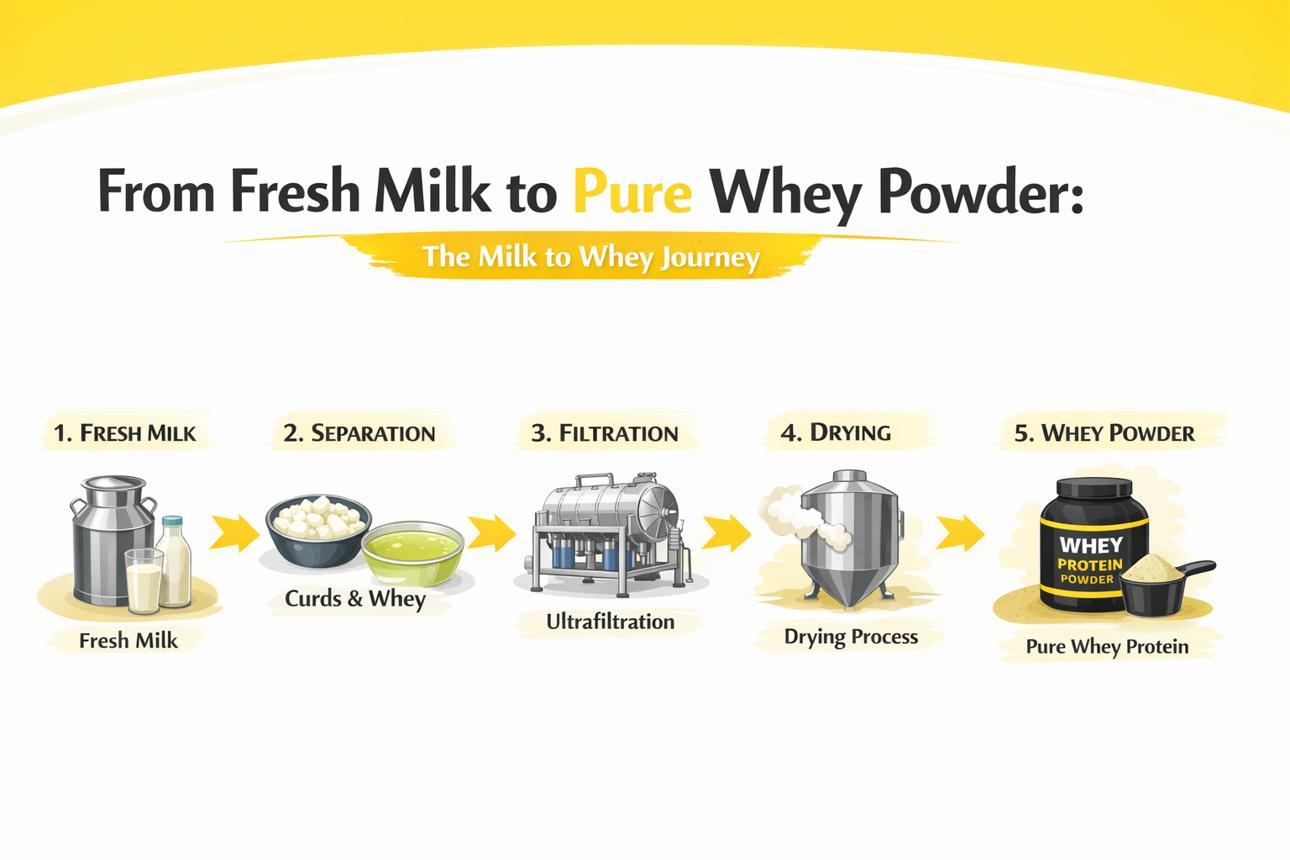
The Whey Industry is undergoing significant transformation, driven by supply constraints, the development of specialty whey products, and innovation in processing technologies. According to a Whey Industry analysis, key trends include the focus on demineralized whey for infant formula, the rise of hybrid protein systems, and the expansion of processing capacity. These trends are reshaping the industry and creating new opportunities for growth.
Market Dynamics
Supply Constraints and Record Pricing
The whey industry is facing unprecedented supply tightening and record-high pricing. Structural demand from mainstream high-protein consumption, aging populations, and GLP-1 medication use is sustaining growth, while supply remains tied to cheese production volumes . Industry analysts report that WPC and WPI have surged to historic highs as processors struggle to secure raw materials. Forward contracts are largely sold out, forcing buyers into premium-priced secondary markets . This environment is reshaping the economics of the industry and driving investment in processing capacity.
Expansion of Demineralized Whey for Infant Formula
Demineralized whey is emerging as a key growth area, driven by stringent requirements for infant formula applications. In parts of East Asia and Southeast Asia, high-growth applications are more closely tied to food manufacturing and consumption upgrading, and these markets value whey's formulation role in specialized nutrition . Manufacturers are investing in demineralization capacity to meet the rising demand for specification-grade products in these high-value sectors.
Hybrid Protein Systems to Mitigate Supply Risk
To manage supply constraints and price volatility, manufacturers are exploring hybrid protein systems that blend whey with alternative proteins. This approach allows companies to maintain product performance while optimizing cost and supply resilience . The development of hybrid systems represents a strategic response to the tight whey market and is likely to become more prevalent as demand continues to grow.
Investment in Processing Capacity
Major dairy ingredient suppliers are investing heavily in expanding whey processing capacity. Companies like FrieslandCampina are expanding their processing capabilities to meet growing demand, though industry leaders expect structural demand to keep the market tight . Plants capable of producing isolate-grade whey are capturing substantial market premiums . Investment in advanced processing technologies is critical for companies seeking to capture value in this high-demand market.
Regional Outlook
The innovation trends are most pronounced in North America and Europe, where leading processors are expanding capacity and developing specialty products. The Asia-Pacific region, particularly Southeast Asia, is a key growth market for demineralized whey and other value-added products.
Competitive Landscape
The competitive landscape is increasingly defined by the ability to secure supply, invest in processing capacity, and develop value-added products. Companies that can document source integrity and sustain stable delivery are more likely to win the trust of high-threshold customers, especially in infant-formula-related demineralized whey .
Conclusion
The Whey Industry is evolving through innovation in processing technology, the expansion of specialty product lines, and the development of hybrid protein systems. Companies that can successfully navigate supply constraints and invest in value-added production are well-positioned for future growth.
FAQs
1. What are the key innovation trends in the Whey Industry?
Key trends include the expansion of demineralized whey for infant formula, the development of hybrid protein systems to mitigate supply risk, and significant investment in processing capacity .
2. How are companies responding to supply constraints?
Companies are investing in processing capacity, exploring hybrid protein systems that blend whey with alternative proteins, and focusing on securing long-term supply contracts .
3. What is driving the demand for demineralized whey?
Demineralized whey is in high demand for infant formula applications, particularly in East and Southeast Asia, where stringent quality requirements are driving consumption of specification-grade products .

 English
 French
 Spanish
 Portuguese
 Deutsch
 Turkish
 Dutch
Dutch
 Italiano
 Russian
 Romaian
 Portuguese (Brazil)
 Greek
Greek