


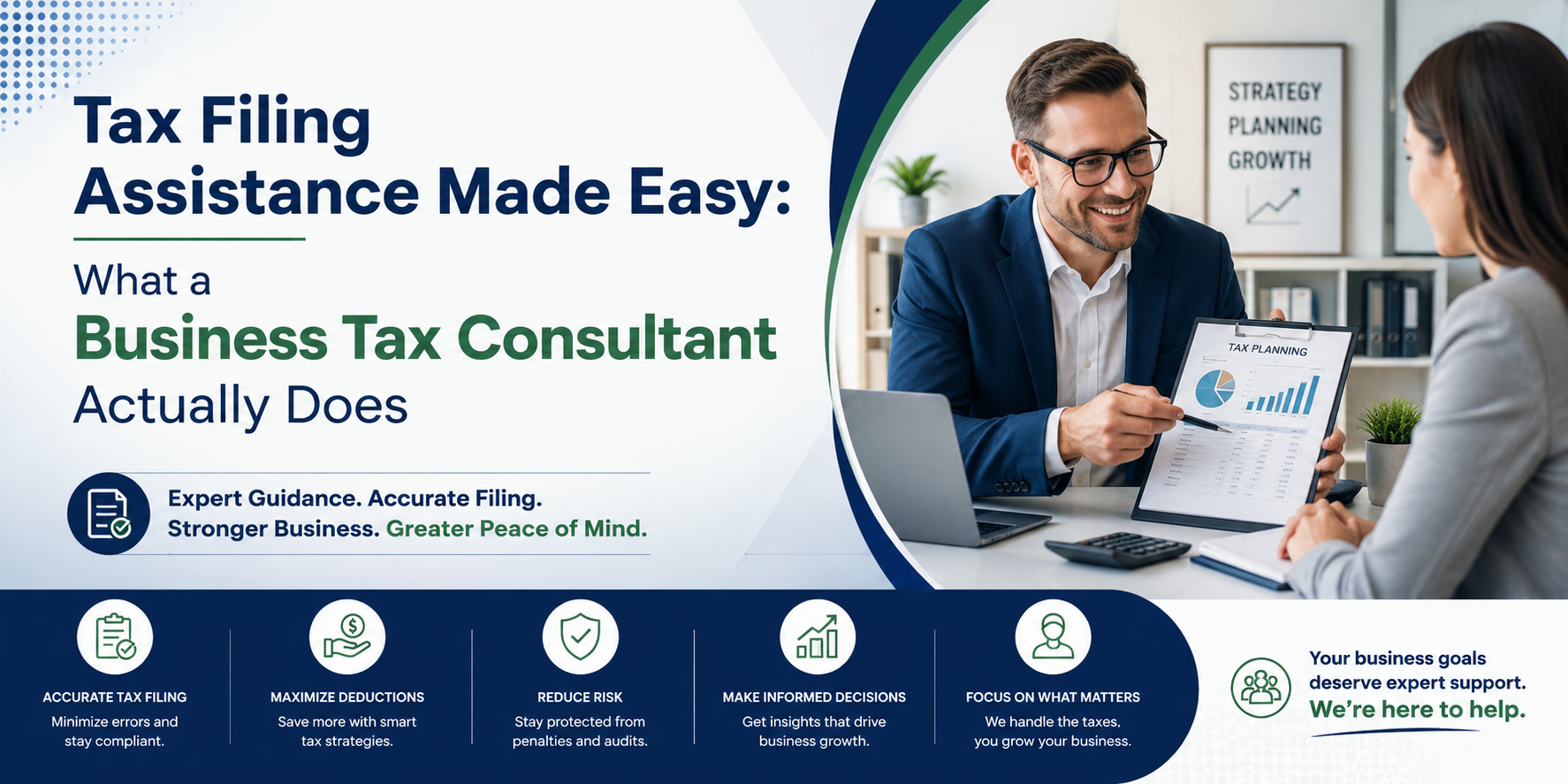
Ask most business owners about tax season, and you'll likely hear a sigh before an answer. Between gathering documents, tracking deductions, and making sure every form is filed correctly, taxes can quickly become one of the most stressful parts of running a business. That stress is exactly why so many companies turn to a business tax consultant for support, not just to file returns, but to take the guesswork out of the entire process.
But what does a tax consultant actually do day to day? In this blog, we'll break down the real, practical work behind tax filing assistance and explain how it fits into a bigger picture of financial planning and compliance.
More Than Just Filling Out Forms
A common misconception is that tax professionals only show up once a year to submit paperwork. In reality, a business tax advisory relationship is an ongoing partnership. Throughout the year, a consultant is reviewing your financial records, tracking changes in income and expenses, and preparing your business well before any deadline arrives.
This proactive approach means that by the time filing season comes around, there are no last-minute scrambles or missing documents. Everything has already been organized, reviewed, and double-checked.
Breaking Down What a Business Tax Consultant Does
When people hire a business tax consultant, they're really gaining access to a wide range of services that go far beyond simple filing. Here's what that typically includes:
1. Organizing Financial Records
Before any return can be filed, records need to be accurate and complete. A consultant reviews income statements, expense reports, payroll data, and receipts to ensure everything is properly categorized and ready for filing.
2. Identifying Deductions and Credits
One of the most valuable parts of working with a professional is uncovering deductions and credits business owners might not know exist. This is where tax advisory services really shine, going beyond compliance to actively reduce what a business owes.
3. Preparing and Filing Returns
This is the core of tax filing assistance: preparing accurate federal, state, and local tax returns and submitting them on time. Consultants ensure every form is completed correctly, reducing the risk of errors that could trigger audits or penalties.
4. Advising on Business Structure
The way a business is legally structured, whether as an LLC, S-corp, partnership, or sole proprietorship, has a direct impact on tax liability. A consultant can advise on whether your current structure is still the most tax-efficient option as your business grows.
5. Planning for the Future
Good tax consulting services don't stop at filing. Consultants help forecast upcoming tax obligations, plan for large purchases or expansions, and structure finances in a way that minimizes future liability.
Why Year-Round Tax Consultation Services Matter
Many business owners assume tax help is only necessary during filing season, but this overlooks one of the most valuable aspects of working with a professional: ongoing tax consultation services.
Throughout the year, tax laws can change, your business circumstances can shift, and new opportunities for savings can emerge. Regular check-ins with a consultant allow you to:
- Adjust financial strategies as regulations change
- Stay ahead of estimated tax payments
- Avoid surprises when it's time to file
- Make informed decisions about hiring, investments, or expansion
This ongoing relationship transforms tax support from a once-a-year scramble into a continuous strategy that protects your business all year long.
How This Saves Time, Money, and Stress
Handling taxes without professional support often means more time spent second-guessing decisions and more risk of costly mistakes. Here's how working with a consultant directly benefits your business:
Time Savings – Instead of spending hours researching tax rules or manually preparing forms, business owners can focus on running their business while professionals handle the details.
Cost Savings – Through strategic planning and accurate tax filing assistance, businesses often save more in reduced liability than they spend on consulting fees.
Reduced Risk – Professional oversight significantly lowers the chances of errors, missed deadlines, or compliance issues that could lead to audits or penalties.
Peace of Mind – Knowing that a knowledgeable professional is managing your taxes allows business owners to make decisions with confidence, rather than uncertainty.
Choosing the Right Tax Consultant for Your Business
Not all tax support is the same. When looking for a business tax consultant, it's worth considering their experience with businesses similar to yours, their familiarity with your industry, and whether they offer both filing support and broader business tax advisory guidance.
The best consultants act as long-term partners, not just seasonal help. They understand your business goals and structure their advice around helping you get there while staying fully compliant along the way.
Final Thoughts
Filing taxes doesn't have to be a stressful, once-a-year scramble. With the right tax advisory services in place, the process becomes organized, predictable, and far less overwhelming. A skilled business tax consultant does much more than fill out forms, they organize your records, uncover savings opportunities, advise on business structure, and provide ongoing tax consulting services that support your business long after filing day has passed.
If you're ready to simplify your tax process and reduce the stress that comes with it, investing in professional tax consultation services is one of the most practical steps you can take. The right support doesn't just make filing easier, it sets your business up for smarter financial decisions all year round.

 English
 Arabic
 French
 Spanish
 Portuguese
 Deutsch
 Turkish
 Dutch
Dutch
 Italiano
 Russian
 Romaian
 Greek
Greek