


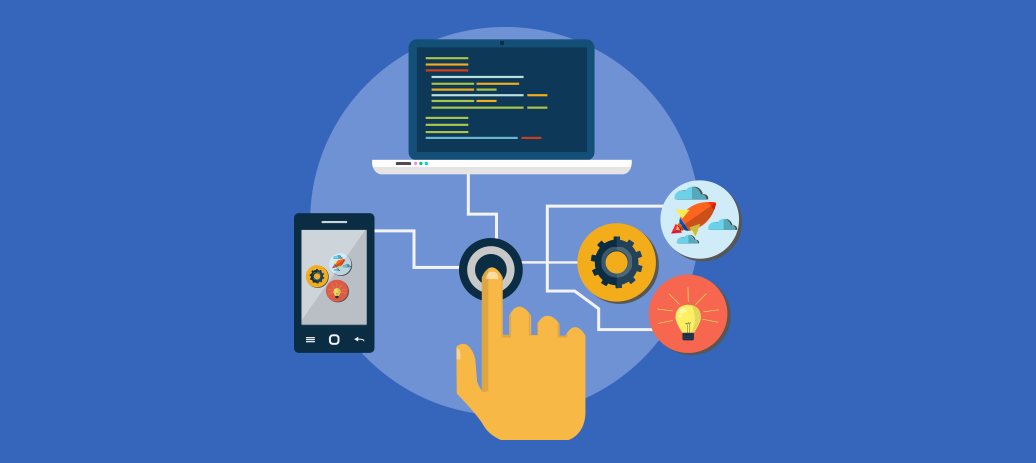
The future of application development is being actively shaped by several powerful US Low Code Development Platform Market Trends, which are steering vendor innovation and enterprise adoption strategies. Perhaps the most transformative trend is the deep and pervasive integration of Artificial Intelligence (AI) and Machine Learning (ML). This is manifesting in two primary ways: AI-powered development assistance and the ability to build AI-infused applications. AI assistants within the platforms are helping developers by suggesting logic, auto-completing data models, and even generating entire application screens from natural language prompts. This "AI co-pilot" concept drastically reduces development effort and lowers the skill barrier even further. Simultaneously, platforms are making it easier to embed sophisticated AI/ML capabilities, such as predictive analytics, image recognition, and natural language processing, directly into the applications being built, enabling a new class of intelligent, data-driven business solutions.
A second major trend is the convergence of low-code with hyperautomation. Hyperautomation is the strategic approach of automating as many business and IT processes as possible using a combination of tools, including low-code application platforms (LCAP), robotic process automation (RPA), business process management (BPM), and AI. Low-code platforms are emerging as the central nervous system in this ecosystem, providing the means to build the human-in-the-loop applications, dashboards, and orchestration layers that manage and interact with automated bot workforces. This trend is moving low-code beyond just application development into the realm of end-to-end process re-engineering. Enterprises are looking for unified platforms that can seamlessly manage both human-centric and automated workflows, and vendors are responding by acquiring RPA companies or building native automation capabilities into their offerings.
Enhanced governance and security are becoming increasingly critical trends as low-code adoption scales across enterprises. When hundreds or thousands of citizen developers are building applications, maintaining control, quality, and security becomes a paramount concern for IT departments. In response, leading low-code platforms are introducing sophisticated governance features. This includes robust role-based access controls, automated code analysis to check for performance and security vulnerabilities, and comprehensive dashboards for monitoring application usage and compliance. The trend is toward creating "guardrails" that empower business users to innovate safely within a framework established and controlled by IT. This focus on enterprise-grade governance is crucial for building the trust needed for organizations to use low-code for their most sensitive and mission-critical processes.
Finally, there is a strong trend towards API-first development and composable architectures. Modern enterprises are not monolithic; they are complex ecosystems of various cloud services, legacy systems, and SaaS applications. Low-code platforms are evolving to become powerful tools for integration and composition. They provide extensive libraries of pre-built connectors and make it simple to consume and expose APIs, allowing developers to easily assemble new applications by composing functionality from existing systems. This "composable enterprise" approach enables incredible agility, as businesses can rapidly reconfigure their digital capabilities to respond to new opportunities. The trend is for low-code to serve as the "glue" that connects the entire enterprise technology stack, solidifying its strategic importance and ensuring its continued relevance in the ever-evolving digital landscape.
Explore Our Latest Trending Reports:
Automated Number Plate Recognition And Detection Sensor Market

 Arabic
 French
 Spanish
 Portuguese
 Deutsch
 Turkish
 Dutch
Dutch
 Italiano
 Russian
 Romaian
 Portuguese (Brazil)
 Greek
Greek