


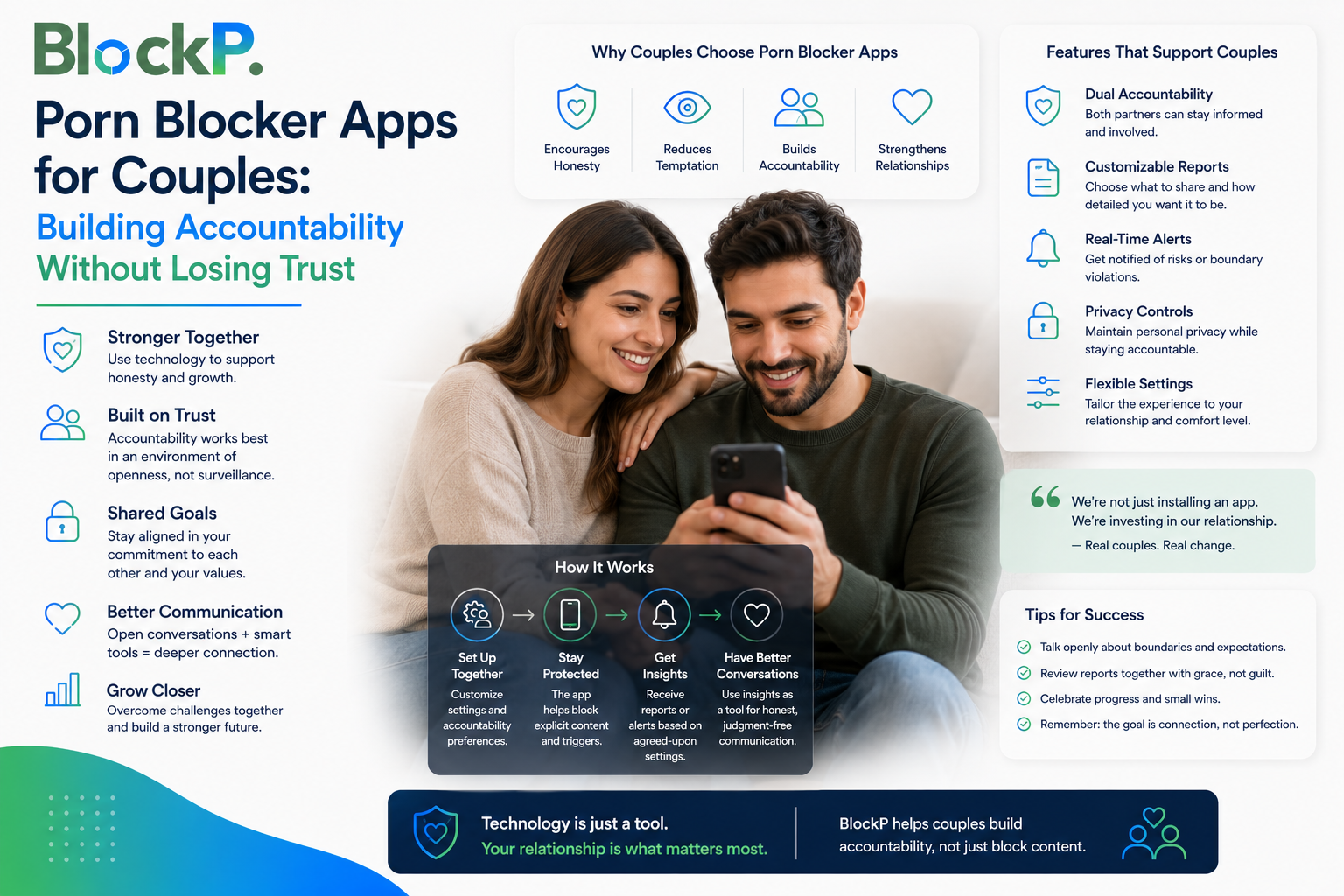
Trust is one of the most valuable foundations of any healthy relationship. It influences communication, emotional intimacy, conflict resolution, and long-term stability. In today's digital world, however, trust often extends beyond face-to-face interactions and into online spaces where habits, content consumption, and technology use can affect relationship dynamics.
For some couples, conversations about pornography, online behavior, or digital boundaries can be difficult to navigate. One partner may be trying to change certain habits. Another may be working to rebuild confidence after a breach of trust. In other situations, both partners may simply want to create healthier online routines that align with their shared values and goals.
As a result, many couples have started exploring accountability tools and content-filtering apps as part of their relationship toolkit.
However, a critical question remains:
How can couples use accountability features without turning the relationship into a system of surveillance?
The answer lies in communication, consent, transparency, and mutual respect. When approached thoughtfully, accountability tools can support trust-building rather than undermine it.
Why Digital Habits Matter in Relationships
Technology has changed the way couples communicate, work, and spend their free time.
Today, many relationship challenges have a digital component.
Examples include:
- Excessive screen time
- Social media conflicts
- Online secrecy
- Digital distractions
- Content consumption habits
- Differences in personal boundaries
These issues do not automatically indicate relationship problems.
However, they can create misunderstandings when expectations are unclear.
For this reason, many relationship experts encourage couples to discuss digital habits just as they would discuss finances, household responsibilities, or long-term goals.
What Accountability Means in a Healthy Relationship
The word "accountability" is sometimes misunderstood.
Some people associate accountability with punishment or control.
Healthy accountability is different.
In a relationship context, accountability typically means:
- Being honest about goals
- Following through on commitments
- Accepting responsibility for actions
- Supporting mutual growth
- Encouraging open communication
Accountability is most effective when it is freely chosen rather than imposed.
When both partners agree on expectations, accountability becomes a collaborative process rather than a source of conflict.
Why Some Couples Choose Accountability Apps
Couples use accountability tools for a variety of reasons.
Some examples include:
Supporting Personal Goals
One partner may be working to reduce certain online habits and wants additional structure.
Rebuilding Trust
After a breach of trust, accountability tools can serve as one component of a broader trust-rebuilding process.
Strengthening Transparency
Some couples appreciate having systems that reinforce honesty and consistency.
Encouraging Healthier Digital Habits
The focus may be on productivity, focus, or intentional technology use rather than pornography specifically.
In all cases, the most successful outcomes usually occur when both partners understand the purpose behind the tool.
Accountability Is Not Surveillance
One of the most important distinctions involves the difference between accountability and monitoring.
Accountability emphasizes:
- Shared goals
- Voluntary participation
- Transparency
- Mutual respect
Surveillance emphasizes:
- Control
- Coercion
- Fear of punishment
- Lack of autonomy
Healthy relationships generally benefit from accountability.
They rarely benefit from constant surveillance.
A partner should never feel pressured into giving up privacy or autonomy.
Instead, accountability systems should be built around informed and enthusiastic agreement.
The Importance of Consent
Consent is a critical component of any shared accountability arrangement.
Before implementing any monitoring or accountability feature, both partners should clearly understand:
- What information is shared
- How it is shared
- Who receives it
- Why it is being used
- When it can be modified or discontinued
Consent is not a one-time event.
It should remain ongoing and revocable.
If either partner becomes uncomfortable with an arrangement, that concern deserves respectful discussion.
This approach helps maintain dignity, autonomy, and trust.
Conversations Couples Should Have First
Before setting up accountability tools, couples often benefit from discussing their expectations openly.
Some helpful questions include:
What Is the Goal?
Is the goal recovery, transparency, focus, productivity, or something else?
What Information Should Be Shared?
Different tools provide different levels of visibility.
What Does Success Look Like?
Partners should define realistic expectations together.
How Will Challenges Be Handled?
Mistakes should be discussed constructively rather than punitively.
These conversations help ensure that technology supports the relationship rather than replacing communication.
Accountability Partners and Digital Wellness
The concept of an accountability partner has become increasingly popular in digital wellness communities.
An accountability partner is someone who provides encouragement, support, and perspective while helping another person stay committed to a goal.
In healthy situations, accountability partners:
- Offer encouragement
- Promote honesty
- Support progress
- Help navigate setbacks
- Celebrate achievements
The role is not to police behavior.
Instead, it is to provide support and motivation.
This distinction is especially important in romantic relationships where power dynamics and emotional vulnerability may already exist.
Using Technology to Support Shared Goals
Technology itself is neither inherently helpful nor harmful.
The impact depends on how it is used.
Some couples find that accountability tools provide structure during periods of change or growth.
For example, solutions such as BlockP include accountability partner features that allow users to voluntarily share certain information with trusted individuals as part of their personal digital wellness goals. When used with mutual understanding and consent, these types of tools can complement broader efforts to improve communication, consistency, and trust.
Importantly, the technology works best when it supports conversations rather than replacing them.
Rebuilding Trust Takes More Than Apps
While accountability tools can be helpful, they are not substitutes for genuine relationship work.
Trust is built through:
- Honesty
- Consistency
- Empathy
- Reliability
- Communication
No application can create trust automatically.
Instead, digital tools can provide additional support for commitments that both partners have already chosen to make.
Couples who rely exclusively on monitoring often discover that underlying relationship concerns remain unresolved.
Technology should reinforce trust—not become the sole foundation of it.
Human Rights Perspective: Consent Matters
From a human-rights perspective, personal autonomy and informed consent remain essential.
Monitoring should always be:
- Voluntary
- Transparent
- Mutually understood
- Respectful of privacy
Monitoring should never be:
- Coercive
- Secretive
- Punitive
- Used to control another person
Healthy accountability respects the dignity and independence of both partners.
Even within committed relationships, individuals retain the right to privacy, personal boundaries, and informed choice.
Technology should empower people rather than diminish those rights.
Creating a Long-Term Accountability Plan
Couples who successfully use accountability systems often view them as temporary support structures rather than permanent solutions.
A sustainable plan may include:
Regular Check-Ins
Discuss progress and concerns openly.
Clear Expectations
Avoid assumptions about what accountability means.
Mutual Participation
Both partners should have a voice in decisions.
Flexibility
Needs may change over time.
Ongoing Consent
Agreements should be revisited periodically.
These practices help maintain balance and prevent accountability systems from becoming sources of tension.
Conclusion
Porn blocker apps and accountability tools can play a valuable role in helping couples support personal goals, improve transparency, and strengthen trust. However, their effectiveness depends less on technology and more on the quality of communication surrounding their use.
Healthy accountability is built on consent, mutual respect, and shared understanding. It is not about controlling a partner or monitoring behavior without permission. Instead, it is about creating an environment where honesty and growth can flourish.
When couples approach accountability as a collaborative effort rather than a surveillance system, technology can become a supportive tool that reinforces trust rather than undermines it.
Frequently Asked Questions
Is it healthy for couples to use accountability apps together?
Yes, many couples find accountability apps helpful when both partners willingly agree to use them. Success typically depends on clear communication, mutual goals, transparency, and ongoing consent rather than the technology itself.
How is consent-based monitoring different from controlling behavior?
Consent-based monitoring involves voluntary participation, shared understanding, and the ability to modify or end the arrangement. Controlling behavior involves pressure, coercion, or unilateral decisions that reduce a partner's autonomy and choice.
What should couples discuss before setting up shared accountability?
Couples should discuss their goals, expectations, privacy concerns, what information will be shared, how setbacks will be handled, and whether both partners genuinely feel comfortable with the arrangement. Clear communication before implementation often leads to healthier outcomes.

 Arabic
 French
 Spanish
 Portuguese
 Deutsch
 Turkish
 Dutch
Dutch
 Italiano
 Russian
 Romaian
 Portuguese (Brazil)
 Greek
Greek